Showing posts with label blockchain. Show all posts

Thursday, March 17, 2022

The Blockchain Bundle

Block chains are incredibly popular nowadays. But what is blockchain? What is Blockchain technology? How do block chain work? What problems do blockchain technology solve?


How can block chain technology be used?


Like the name indicates, a blockchain is a chain of blocks that contains information. This technique was originally described in 1991 by a group of researchers and was originally intended to timestamp digital documents so that it’s not possible to backdate them or to tamper with them.


Almost like a notary.


However it went by mostly unused until it was adapted by Satoshi Nakamoto in 2009 to create the digital cryptocurrency Bitcoin.


A blockchain is a distributed ledger that is completely open to anyone. They have an interesting property: once some data has been recorded inside a blockchain, it becomes very difficult to change it. So how does blockchain work? Well, let’s take a closer look at a block. Each block contains some data, the hash of the block and the hash of the previous block.


The data that is stored inside a block depends on the type of blockchain. The Bitcoin blockchain for example stores the details about a transaction in here, such as the sender, receiver and amount of coins. A block also has a hash.


You can compare a hash to a fingerprint. It identifies a block and all of its contents and it’s always unique, just as a fingerprint.


Once a block is created, it’s hash is being calculated. Changing something inside the block will cause the hash to change. So in other words: hashes are very useful when you want to detect changes to blocks.


If the fingerprint of a block changes, it no longer is the same block. The third element inside each block is the hash of the previous block.


This effectively creates a chain of blocks and it’s this technique that makes a blockchain so secure. Let’s take an example. Here we have a chain of 3 blocks.


As you can see, each block has a hash and the hash of the previous block. So block number 3 points to block number 2 and number 2 points to number 1.


Now the first block is a bit special, it cannot point to previous blocks because it’s the first one. We call this the genesis block. Now let’s say that you tamper with the second block.


This causes the hash of the block to change as well. In turn that will make block 3 and all following blocks invalid because they no longer store a valid hash of the previous block.


So changing a single block will make all following blocks invalid. But using hashes is not enough to prevent tampering. Computers these days are very fast and can calculate hundreds of thousands of hashes per second.


What is Blockchain Technology? Block Chain Crypto Explained.


You could effectively tamper with a block and recalculate all the hashes of other blocks to make your blockchain valid again. So to mitigate this, blockchains have something called proof-of-work. It’s a mechanism that slows down the creation of new blocks.


In Bitcoins case: it takes about 10 minutes to calculate the required proof-of-work and add a new block to the chain. This mechanism makes it very hard to tamper with the blocks, because if you tamper with 1 block, you’ll need to recalculate the proof-of-work for all the following blocks.


So the security of a blockchain technology comes from its creative use of hashing and the proof-of-work mechanism. But there is one more way that blockchains secure themselves and that’s by being distributed. Instead of using a central entity to manage the chain, blockchains use a peer-to-peer network and anyone is allowed to join.


When someone joins this network, he gets the full copy of the blockchain. The node can use this to verify that everything is still in order.


Now let’s see what happens when someone creates a new block. That new block is send to everyone on the bitcoin blockchain network. Each node then verifies the block to make sure that it hasn’t been tampered with.


If everything checks out, each node adds this block to their own blockchain. All the nodes in this network create consensus.


They agree about what blocks are valid and which aren’t. Blocks that are tampered with will be rejected by other nodes in the network. So to successfully tamper with a blockchain you’ll need to tamper with all blocks on the chain, redo the proof-of-work for each block and take control of more than 50% of the peer-to-peer network.


Only then will your tampered block become accepted by everyone else. This is almost impossible to do!


Blockchains are also constantly evolving. One of the more recent developments is the creation of smart contracts.


These contracts are simple programs that are stored on the blockchain and can be used to automatically exchange coins based on certain conditions.


More on smart contracts in a later video. The creation of blockchain technology peaked a lot of people’s interest.


Soon, others realized that the blockchain technology could be used for other things like storing medical records, creating a digital notary or even collecting taxes. So now you know what a blockchain is, how it works on basic level and what problems it solves. Want to learn how you can implement a simple blockchain with Javascript?


Then checkout this video here. And as always: thank you very much for watching.

Defi

Saturday, January 29, 2022

The people's network is open. Get your piece of the pie now!

You own the network! That's right, in this opportunity you own the network, The People's Network. This is a great time to get in on the ground floor of one of the largest market disruptions of the century. That's right the Internet of Things is being built as you read this with affiliate crypto resources. The Internet of Things offers us a great option for mining and earning a crypto currency. That's right this program introduces a ground breaking approach to real world hardware and benefits tied to a crypto currency. That means your money is safe and it will continue to earn you passive income for you well in to the future.


Curious about crypto and the blockchain? This makes it easy to get in to crypto, while earning it at the same time. Mobile phone services and WIFI have paved the way and now is the time as more and more devices get connected. By deploying a simple device in your home or office, you can provide your city with miles of low-power network coverage for billions of devices and earn passive crypto at the same time. If this sounds amazing it's because it is. Reserve your Hotspot deployment on the helium network and leverage our dynamic hosting affiliate program to refer others and earn crypto.

Thursday, April 29, 2021

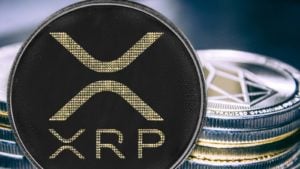
Is XRP The New Bitcoin? – Article #1

Is XRP The New Bitcoin? – Article #1

Ripple “XRP” is by far one of the best cryptocurrency to invest in 2021.  There are a variety of reason’s many experts considers XRP to be the next Bitcoin.  At only $1.34 a share, I want to highlight an March 9, 2021 article that appear on Nasdaq.com:

Here’s Why Ripple XRP Could Be the Crypto Option to Own Right Now

As far as cryptocurrencies go, Ripple (CCC:XRP-USD) is a micro-cap option compared to juggernauts Bitcoin (CCC:BTC-USD) and Ethereum (CCC:ETH-USD).

xrp-1-300x169.jpg

Source: Shutterstock

That said, investors in XRP appear to like the growth trajectory of this smaller cryptocurrency relative to its larger peers.

Indeed, as any “investment” grows to a formidable size, long-term growth prospects tend to decline.

Those bullish on a growth area ought to focus on the smaller-cap players. That is, if investors think such companies (or in this case, cryptocurrencies) have a shot at growing their influence relative to their peers.

Here’s a look at why XRP stock could be a winner among its peer group for such investors.

Ripple Built for Business

When XRP was initially designed, investors had a goal in mind. Ripple’s founders wanted to create a cryptocurrency designed specifically for real-world use cases. This is an extremely important fact, and one investors need to take seriously.

Personally, my take on cryptocurrencies is that most digital coins don’t have a visible path to becoming a ubiquitous payment method. The case can be made that various digital tokens are certainly a store of value. However, as far as being “currency-like” in common every-day transactions, cryptocurrencies have little utility.

I’m not going to want to be paid in a currency that could appreciate or depreciate by double-digits on a daily basis. Buying that loaf of bread becomes a lot more difficult to do when we’re talking about six or seven decimal places, in the case of Bitcoin.

However, XRP was designed to handle payments. Specifically, XRP solves a key problem in cross-border payments involving two disparate currencies. The XRP decentralized blockchain technology allows for transactions to be settled almost instantaneously.

For those aware of how the SWIFT process works, this technology is a huge upgrade. Having a transaction approved in as little as 3-5 seconds as opposed to 1-5 business days is a real-world upgrade.

XRP2-300x180.jpeg

Ripplenet a Big Deal

Another key factor to consider is XRP’s existing global payment platform, Ripplenet. This is a decentralized network using XRP’s ledger and the XRP cryptocurrency to provide a global payments platform for users.

This platform is widely used globally and is growing in its influence, though perhaps maybe not to the degree many have expected in recent years.

The advantage of using Ripplenet is mainly related to the transaction headaches caused by international transfers. There’s a lot to do when undertaking a foreign transaction.

Where to buy RPX?

Loading up an account with foreign currency is eliminated with Ripplenet. As is paying a (sometimes hefty) currency exchange fee to a financial institution. Of course, waiting for days to have the transaction cleared can be the most annoying part.

Ripplenet provides businesses with a cheaper and more efficient option. Transactions are settled immediately, and in the local currency on both sides. This is obviously advantageous to large multinational companies and those with cross-border banking needs.

The Bottom Line on Ripple

In general, cryptocurrencies are still nascent in respect to wide-spread usage. However, as I’ve pointed out, the real-world use cases for XRP are attractive.

Accordingly, I think investors with a bit of “fun money” and the inclination to bet on these speculative assets might want to consider Ripple. As far as long-term bets go (and I view all cryptocurrencies as speculative long-term bets), Ripple’s use case is certainly interesting. I like the highly-applicable nature of XRP relative to its crypto peers.

The extent to which XRP continues to grow its share of the ForEx transfer market remains to be seen. However, I like the targeted niche Ripple and XRP operate in right now. This is a cryptocurrency with a purpose.

That said, I’d caution investors to invest only what they can afford to lose in XRP, or any of its competing crypto options right now. It’s impossible to say what the market capitalization of these digital tokens could (or should) be, so trade carefully.

On the date of publication, Chris MacDonald did not have (either directly or indirectly) any positions in the securities mentioned in this article.

The post Here’s Why Ripple XRP Could Be the Crypto Option to Own Right Now appeared first on InvestorPlace.

The views and opinions expressed herein are the views and opinions of the author and do not necessarily reflect those of Nasdaq, Inc.

That being said, imagine if you bought 100 shares of “XRP” today.  100 shares x 1.34 = $134.00. Do the math.  If XRP does as good as many expect them to, your $134 investment can easily skyrocket your returns:

If / When XRP hits $50, 100 shares would be worth $5,000

If / When XRP hits $100, 100 shares would equal $10,000

Imagine if / when XRP hits $1,000.  With only 100 share would equal $100,000.  The SKY could be the beginning.  Not even the limit.

Remember, the naysayers said Bitcoin would NEVER make it when it was $1 a share (11 years ago).  Today it is Bitcoin is worth $56,000

Click-to-buy-XRP-300x158.png

Spread the news.  Share this article!

blockchaintechnology

Tuesday, August 7, 2018

Introducing the world's first 100% green-powered public blockchain...

-powered public blockchain...
The Ammeris Blockchain is a public permissioned distributed ledger system powered entirely by renewable energy that is secure, regulatory compliant, green tech, and governed by the Ammeris Foundation. The Foundation has adopted a set of policies and procedures that permission network maintenance and operations (data centers) to create an optimal environment that complements but ultimately exceeds the performance of existing public blockchain networks.

renewables